Water Conservation
Water is an essential resource for Southern Company’s1 electric operations, and it is our policy to conduct business in ways that are committed to protecting the environment and communities, including our approaches to responsible water usage and management.
Responsible Water Management
We are committed to the protection of our water resources and the communities we serve. Compliance is the foundation of our environmental commitment. We consider the impact of the Southern Company system’s current and future operations on water availability, by focusing on researching, developing, and evaluating innovative technologies that address industry needs, while providing benefits to customers and the environment.
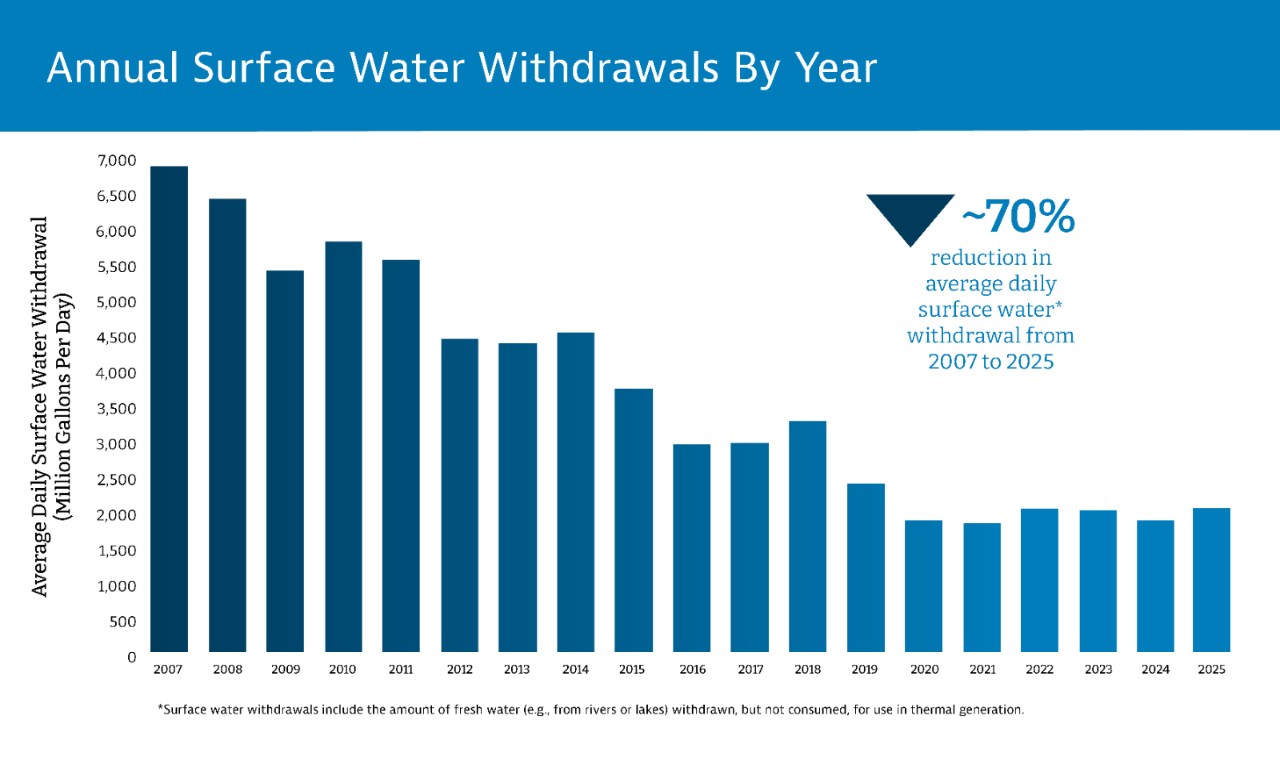
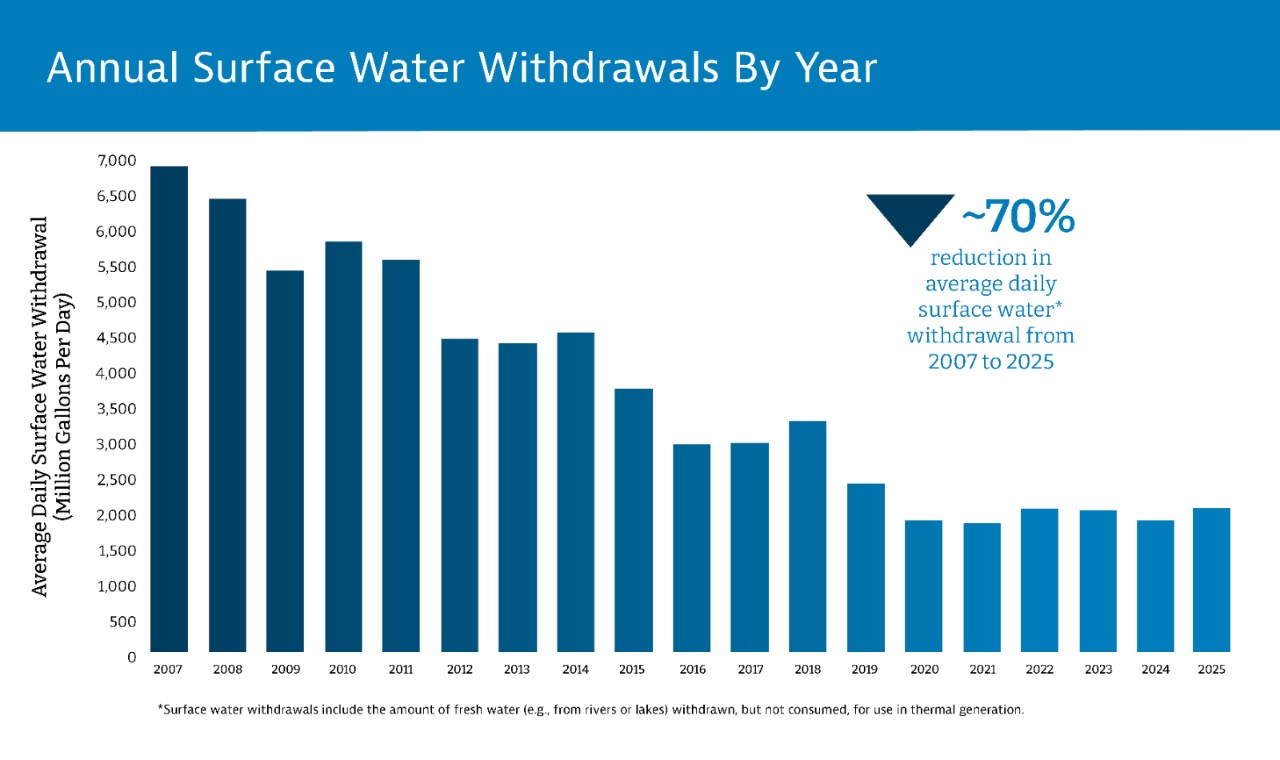
From 2007 to 2025, the Southern Company system has significantly reduced its water use
At Southern Company, we have:
- Decreased average annual surface water withdrawal by approximately 70%
- Decreased water consumption by approximately 20%
- Returned, on average, approximately 93% of the water withdrawn back to its source
We expect annual surface water withdrawal intensity (gal/MWh) to improve as we implement new technologies to modernize our generating fleet to meet future energy demands.
Water Management Governance
The Southern Company system operates a rigorous water management program with the goal of safely and effectively managing water-related risks across the business. Governance of water-related risks begins with executive leadership and extends throughout the company to unit-operational subject matter experts.

Water management governance is a function of the system-level Water Governance Team and the Environmental Management Council. The Water Governance Team meets regularly to share best practices and lessons learned for continuous improvement, and discuss regulatory developments, develop compliance training programs to manage environmental risks, and develop and maintain communication processes for employee compliance.

At the beginning of 2024, the Southern Company system completed a readiness assessment of our water use data collection, data management processes, and water reporting. As a result of the review, we have established a new Water Use Reporting Working Group within the Water Governance Team to focus on knowledge-sharing, reviewing processes and internal controls, and best practices.
The water management governance structure facilitates water-risk identification and mitigation. The Water Governance Team annually reviews water-risk maps, identifying and discussing water risks associated with regulatory developments and water availability.
Mitigating Water-Related Risk
Although the footprint of Southern Company’s retail electric operating companies is in the Southeast, a region primarily known to be water-rich, we continue to focus on being good stewards of our water resources. Water is an essential resource for electricity generation, particularly for cooling processes in steam electric generating power plants, and any disruption in water availability can have significant operational implications. Climate variability, economic growth, regulatory changes, and competing demands for water resources are some of the factors that could pose challenges to regional water availability.
Alternative Water Sources
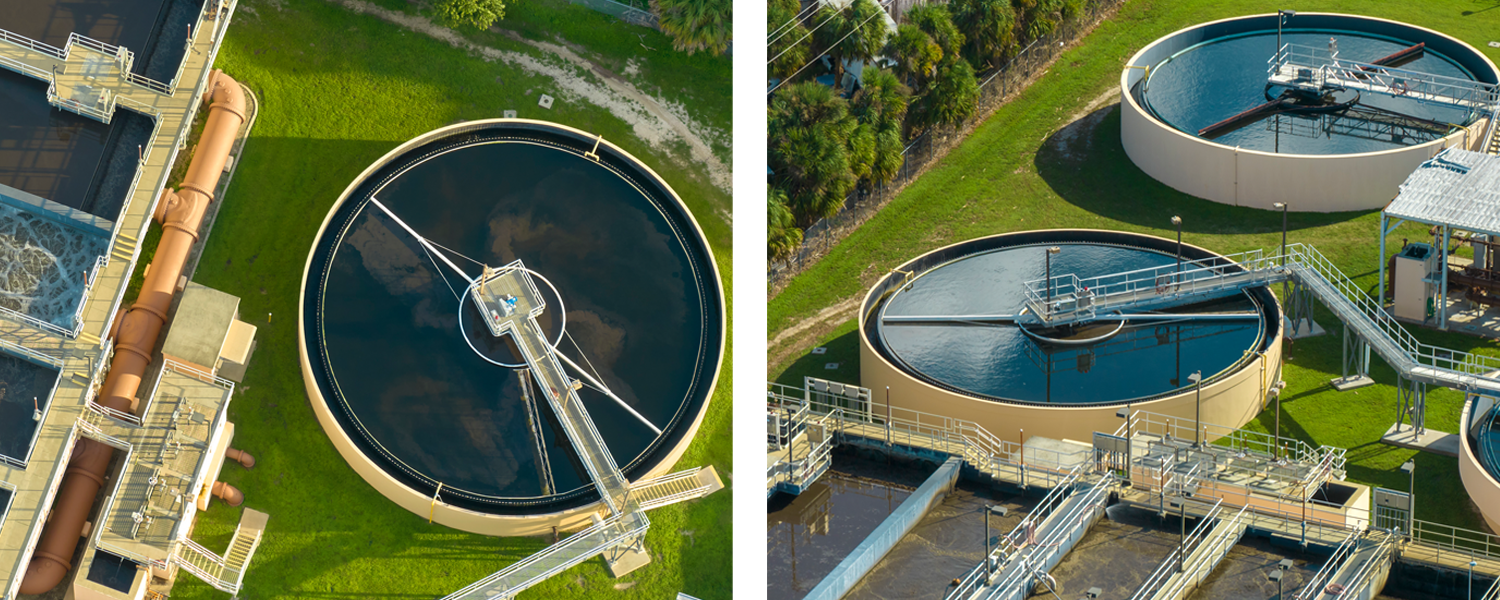
A key strategy to water conservation is the use of alternative water sources to reduce dependency on freshwater supplies, which several of our facilities employ through the use of municipal and reclaimed or grey water for cooling and other plant processes. This not only conserves freshwater but also ensures a more sustainable and resilient water supply for our operations.
As we plan for future generating resources, numerous operational and environmental requirements are being evaluated, including water usage and the potential need for additional water storage, and alternative cooling technologies like air-cooled condensers.
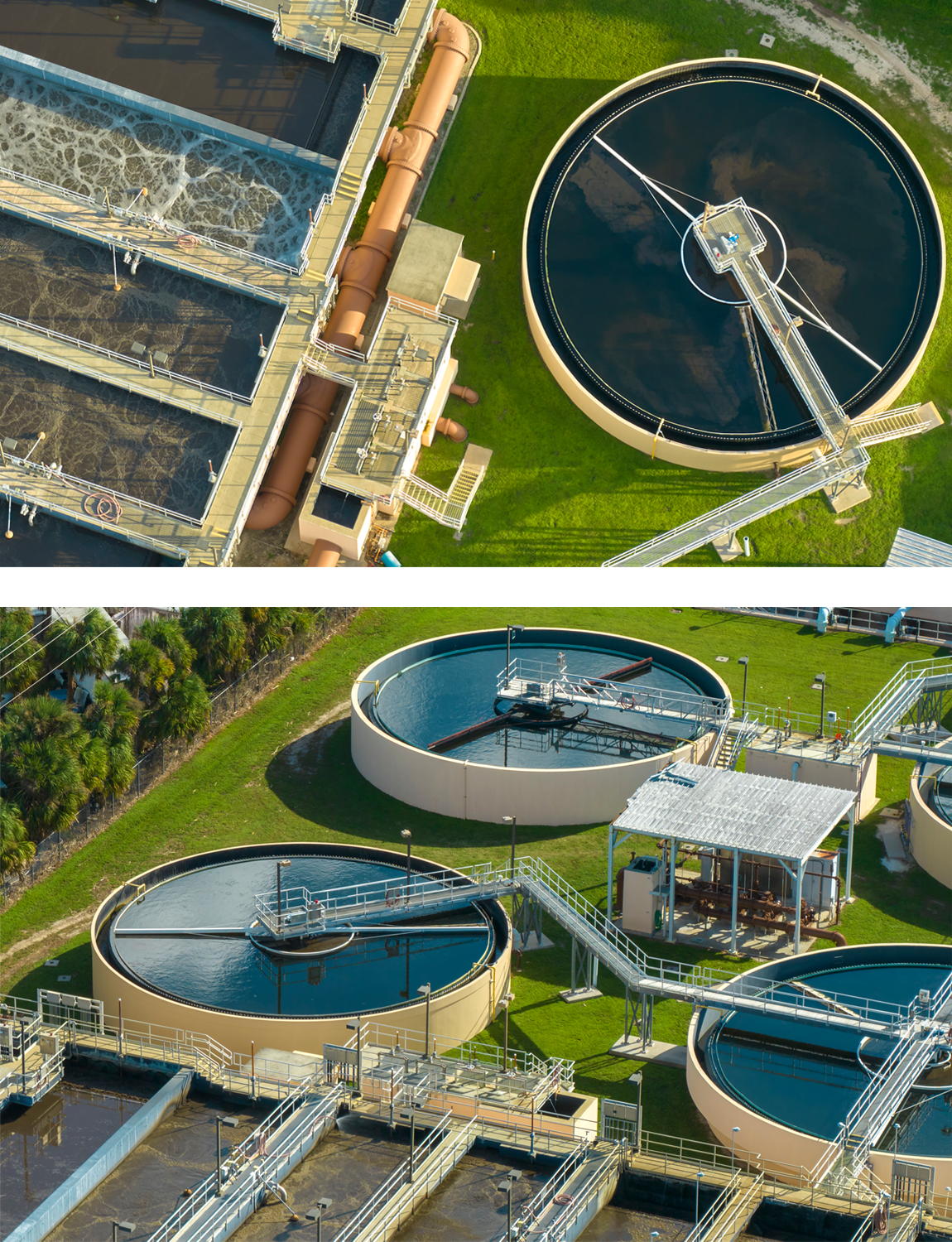
Georgia Power is concluding an effort to explore the use of treated municipal effluent as an alternative cooling water source at Georgia Power’s Plant McDonough-Atkinson. Testing is focused on the operational impacts associated with switching from Chattahoochee River water to treated municipal effluent from a nearby Water Reclamation Facility.
Utilization of an alternative water source provides an opportunity to minimize reliance on freshwater resources while maintaining a reliable and resilient supply. Potential benefits include increased drought resilience and community benefits for economic growth and stewardship.
Comprehensive Water Planning
In addition to using alternative water sources, our facilities work with their respective state and local agencies, as needed, to actively participate in water resource planning and ensure our water usage aligns with regional water availability. Certain facilities have regulations that require maintaining comprehensive Water Conservation Plans. These plans outline measures to optimize water use efficiency and minimize waste. This regulatory collaboration allows for anticipating and addressing water-related challenges, fostering a cooperative approach to water resource management.
Improving Operational Water Efficiency
Southern Company is at the forefront of researching and developing energy technologies, and managing resources to reduce the environmental impacts of our business, both of which are central to our commitment to providing clean, safe, reliable, and affordable energy to our customers and the communities we serve.
Part of our commitment to conservation and environmental stewardship includes the prudent use of water resources for electric power generation. The significant economic development and population growth projected across Southern Company’s electric service territory are expected to increase the demand for both energy and water in the coming decade, creating an expanding need for innovative solutions to improve water efficiency for power generation.
We aim to continually improve overall water efficiency by adopting best practices in water management, and:
- Investing in advanced technologies.
- Facility retirements over time.
- Adopting best practices in water management.
- Operating the Water Research and Conservation Center.
Water Research and Conservation Center
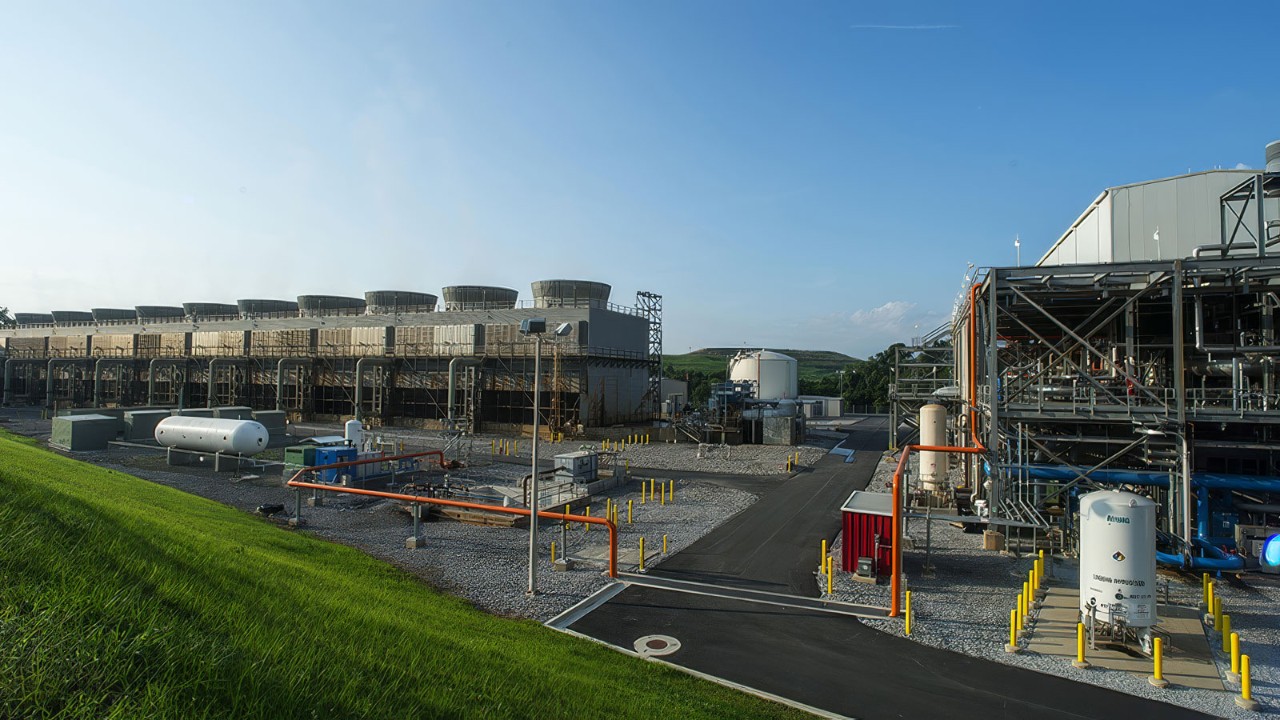
Southern Company is a leader in water conservation, collaborating with EPRI at the cofounded Water Research and Conservation Center located at Georgia Power’s Plant McDonough-Atkinson in Atlanta, Georgia. We are identifying, testing and implementing innovative technologies to improve the efficiency of our thermal generating units and reduce our dependence on freshwater resources.
Learn about the Water Research and Conservation Center