

Energy innovation for what’s next
Southern Company focuses on practical innovation to deliver energy that is reliable, resilient and affordable. We combine industry-leading research with real-world demonstrations alongside customers and partners. Our goal: turn ideas into solutions that strengthen the grid, improve customer experience and reduce emissions responsibly for the communities we serve.
Developing battery energy storage systems
Building flexibility into the Grid
Southern Company is expanding energy storage with large scale battery energy storage systems that improve grid reliability and support renewable integration. New projects add fast, dispatchable capacity and strengthen peak and storm resilience, while long duration, non lithium pilots explore multi day backup for communities and data center growth. Through strategic projects and partnerships across our footprint, we’re scaling storage to keep service dependable and costs manageable, while unlocking new efficiencies and accelerating innovation across our system.
Driving breakthroughs in carbon solutions
National Carbon Capture Center
Operated by Southern Company, the National Carbon Capture Center is the U.S. Department of Energy’s primary test site for carbon management solutions—evaluating carbon capture, conversion and removal technologies under actual operating conditions. The center has logged over 165,000 hours and tested more than 85 technologies, helping cut carbon capture costs by over 40% and creating viable pathways for power and industrial customers to lower emissions without sacrificing reliability or affordability.
Developing fourth-generation nuclear reactor technology
TerraPower
Southern Company, TerraPower and the U.S. Department of Energy are advancing the Molten Chloride Fast Reactor through two key efforts: the Integrated Effects Test—the world’s largest chloride salt system—and the Molten Chloride Reactor Experiment at Idaho National Laboratory, which in 2025 produced the first enriched fuel salt batches. These milestones pave the way for carbon free power and high temperature process heat—boosting reliability, affordability and energy security for customers.
Accelerating the development of hydrogen pathways
Unlocking clean hydrogen for everyday use
Southern Company is exploring hydrogen from production to use. Projects include converting food waste into clean hydrogen and testing hydrogen-natural gas co-firing at utility scale. Together, these efforts show how low carbon fuels can leverage existing assets, strengthen system resilience and help keep energy affordable while providing real solutions for power, industry and transportation.
Real-world innovation for tomorrow’s homes
Building Smart Neighborhoods
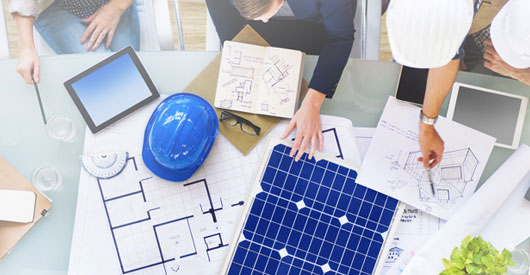
Southern Company’s Smart Neighborhoods are real communities where advanced home technologies are tested under everyday conditions. Early projects explored two approaches: in Alabama, a community microgrid combining solar, battery storage, and natural gas for reliability; and in Georgia, rooftop solar with in home batteries, efficient construction and connected appliances. In Mississippi, solar glass shingles with battery storage offer another model for comfort and resilience.
A new Illinois neighborhood, led by Nicor Gas and Habitat for Humanity, are advancing dual fuel homes that integrate electricity, natural gas, solar and storage to study comfort and affordability in colder climates. Insights from these living labs—many built to U.S. Department of Energy Zero Energy Ready standards—are helping shape solutions that cut energy costs and strengthen community resilience.


Department of Energy
Developing Next-Generation Clean Hydrogen Technologies
The U.S. Department of Energy has awarded Southern Company R&D funding for the Novel Microbial Electrolysis System for Conversion of Biowastes into Low-Cost Renewable Hydrogen project. Southern Company Gas leads the project in collaboration with partners, Electro-Active Technologies and T2M Global, to advance a technology for production of clean hydrogen from waste. The project’s approach targets distributed generation of hydrogen from food waste, diverting the waste from landfills and minimizing greenhouse gas emissions from the food value chain and the transportation sector.
Reflecting its goal of achieving net-zero operations while providing customers and communities with affordable, reliable and resilient energy, Southern Company is an active member of the Hydrogen Council, a global CEO-led coalition of companies with a united vision and long-term ambition for hydrogen to foster the clean energy transition.
R & D
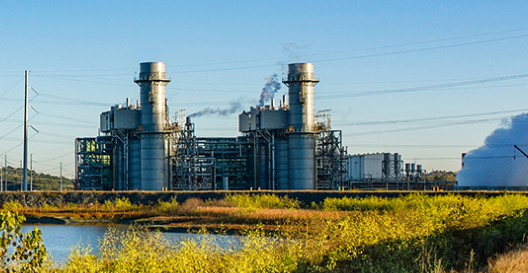
Demonstrating Fuel Blending of Hydrogen and Natural Gas
As a leader in research and development (R&D), Southern company believes hydrogen technology can be one of many solutions to help deliver a sustainable future. Over the past five years, Southern Company has invested approximately $16 million of its R&D budget in hydrogen projects. We intend for these investments to support our mission of providing clean, safe, reliable and affordable energy to customers and further economic development and growth in our communities.
The power of Renewable Natural Gas
Did you know that the waste from cows and food scraps can help keep your house warm? This naturally occurring waste produces methane that can be captured and transformed into a sustainable fuel called Renewable Natural Gas (RNG). Integrating RNG into existing natural gas infrastructure can reduce emissions without costly upgrades, improve local air quality, create high-paying clean-energy jobs and promote locally sourced natural gas.
Georgia Power
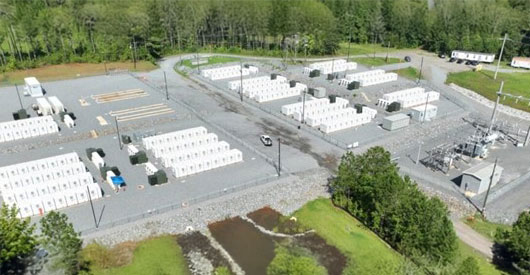
500 MW of new battery energy storage systems in Georgia
Georgia Power has identified locations for 500 MW of new battery energy storage systems (BESS) authorized by the Georgia Public Service Commission (PSC) earlier this year as part of the company's 2023 Integrated Resource Plan (IRP) Update.
Once developed, these projects will serve as dispatchable capacity resources that will provide customers with a reliable and economical source of electricity for the winter of 2026/2027. These resources will add to Georgia Power's diverse generation portfolio, helping to ensure the company has the mix of technologies necessary to provide clean, safe, reliable and affordable electric service for all customers during all hours.
Alabama Power
Alabama’s first utility-scale battery storage system
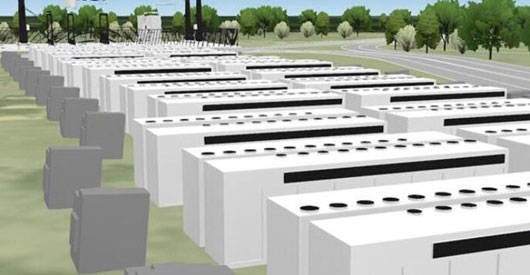
Alabama Power will develop the state’s first utility-scale battery energy storage system (BESS) on the former Plant Gorgas site in Walker County, which reliably powered Alabama for more than a century. The new Gorgas Battery Facility will store up to 150 MW of electricity generated by other Alabama Power resources. 150 MW is equivalent to the capacity needed to power about 9,000 homes.
The 7-acre facility will be designed as a standalone system that will connect to and charge directly from the electric grid – the interconnected system of high voltage wires and equipment that moves large amounts of electricity across the state.